Start with a question.
What health problem interests you? Who is affected? Where does it happen? Why might the pattern be different from place to place?
GHBDC invites young people to investigate real-world global health questions through data, evidence, collaboration and imagination.
The Global Health Big Data Challenge is a learning and investigation pathway that helps young people move from curiosity to evidence-based ideas.
What health problem interests you? Who is affected? Where does it happen? Why might the pattern be different from place to place?
Find reliable data, understand what it measures, investigate patterns and learn to recognize the limits of what the data can tell you.
Connect evidence with context, generate ideas and communicate a thoughtful proposal for improving health.
Good data science is not simply about making charts. It is about asking better questions, understanding where information comes from and thinking critically about what the evidence actually shows.
GHBDC encourages young investigators to look for patterns — and then ask why those patterns exist.
Begin exploring data →Describe the pattern before trying to explain it.
Consider social, economic, environmental and health-system factors.
Identify uncertainty, missing information and questions for further investigation.
You do not need to be a data scientist to begin. Start with a question and build your skills along the way.
Choose a health issue that makes you curious.
Discover datasets and understand their sources.
Compare, visualize and interpret what you find.
Challenge assumptions and consider different explanations.
Turn your evidence into a mini-proposal for action.
Tell others what you discovered and why it matters.
GHBDC connects young investigators with major public health and global health data resources.
Explore health inequalities through disaggregated data, country profiles and tools for health equity.
Explore WHO data →Explore global health evidence, estimates and research from the Institute for Health Metrics and Evaluation.
Explore IHME →Explore Canadian health indicators, surveillance information and public health data.
Explore Canadian data →Explore public health data, indicators, surveillance systems and research resources.
Explore CDC data →GHBDC is designed to help young people develop confidence progressively. You can begin by asking questions and exploring simple data before moving toward deeper analysis and independent investigation.
The GHBDC mini-proposal pathway helps students move beyond describing a problem. It asks them to connect evidence with a possible response.
A future GHBDC proposal can become the foundation for a larger research project, team investigation, classroom project or community initiative.
Explore proposal resources →These examples are starting points — not answers.
Explore geography, income, access and health outcomes.
Compare risk factors, populations and places.
Investigate connections between environment and wellbeing.
Ask what the data reveal — and what they leave unanswered.
Bring together different strengths. One person might enjoy finding data. Another might love visualization. Someone else might ask the questions that change the direction of the project.
In 2015, the late Mohammad Asadi Lari and Dr. Alexandre Sacha Noukhovitch co-founded STEM Fellowship, a country-wide student network created to empower young people with essential skills in data science and scholarly communication.
Through programs including the STEM Fellowship Journal, National Big Data Challenges and STEMpowerment, they inspired inquiry-driven learning among a generation of data natives while helping remove socio-economic and geographic barriers to participation in scientific disciplines.
The partnership between Global Health Explorers and STEM Fellowship through GHBDC carries this mission forward — helping inspire the next generation of global health innovators, researchers and leaders.
Mohammad Asadi Lari was posthumously awarded the Meritorious Service Medal (Civil Division) by the Governor General of Canada, jointly recognized with Dr. Alexandre Sacha Noukhovitch for their work through STEM Fellowship.
The GHBDC partnership carries forward a vision that connected young people with data, inquiry, scientific communication and opportunity.
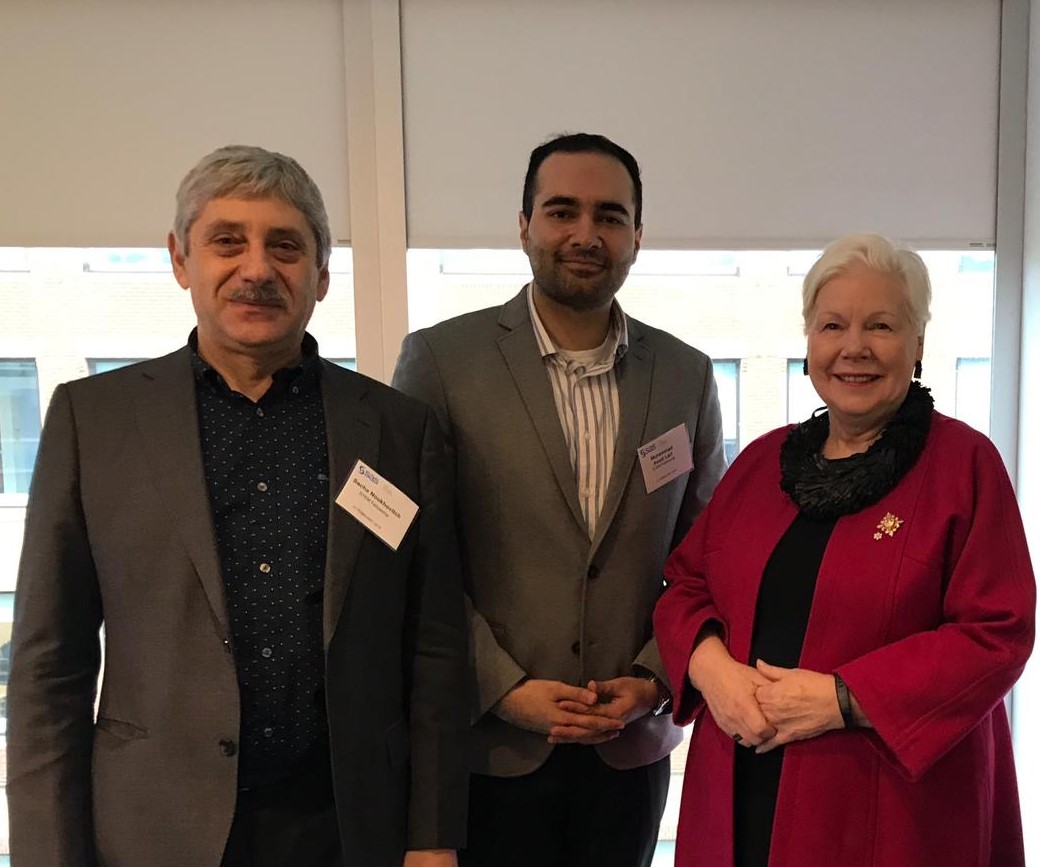
The official Canadian records recognize Mohammad H. Asadi Lari, M.S.M., for his contribution through STEM Fellowship and its work empowering youth in data science, scholarly communication and scientific participation.
The official Government of Canada publication records Mohammad H. Asadi Lari, M.S.M., among the recipients of the Meritorious Service Medal (Civil Division).
View Canada Gazette →The national recipient registry provides the official citation and records Mohammad's recognition alongside Dr. Alexandre Sacha Noukhovitch.
View official citation →The Governor General's official recognition page provides the national context for Meritorious Service Decorations and includes the citation recognizing Mohammad H. Asadi Lari and Dr. Alexandre Sacha Noukhovitch.
View Governor General page →A civic and community feature highlighting Mohammad's enduring impact, leadership and inspiration associated with his Meritorious Service honour.
Community featureThe GHBDC resource library will grow with the program.
You do not need to have the perfect idea. You only need enough curiosity to ask the first question.
Explore. Investigate. Imagine. Act.
Return to GHE →