01
Explore
Begin with questions. What does wellbeing mean to you? How might different communities understand health?
Start here →Health is more than the absence of disease. For Indigenous Peoples, wellbeing is deeply connected with culture, identity, family, community, land, relationships and the ability to determine one's own future.
Begin by exploring what health and wellbeing can mean from Indigenous perspectives—and why respect, relationships, equity and self-determination matter.
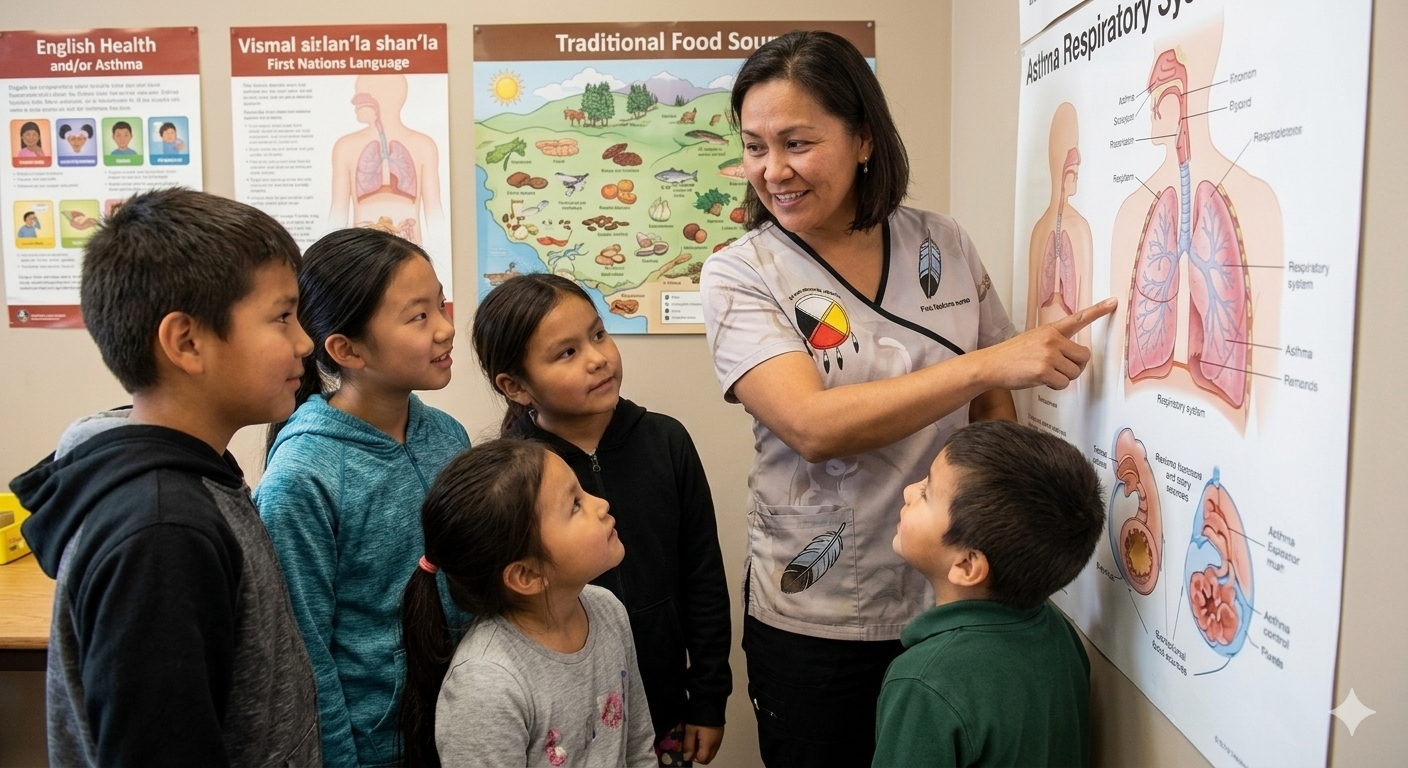
Indigenous Peoples are diverse communities with distinct histories, cultures, languages, traditions and relationships with land and place.
Understanding Indigenous health means moving beyond a narrow view of health as individual biology or healthcare services. It invites us to consider the wider conditions that shape wellbeing—including culture, belonging, community, environment, education, income, housing, safety, discrimination and self-determination.
Learning about these connections helps us become more thoughtful global health explorers: people who listen carefully, recognize different ways of knowing, examine evidence critically and respect the leadership of Indigenous communities.
There is no single Indigenous experience. When you encounter a story, teaching or health perspective, ask yourself: Who is speaking? What community does this knowledge come from? What history and context matter?
Move through the pathway at your own pace. Each step builds a deeper understanding of Indigenous health and wellbeing.
Begin with questions. What does wellbeing mean to you? How might different communities understand health?
Start here →Discover key ideas about Indigenous Peoples, health, wellbeing, culture and determinants of health.
Learn more →Examine evidence, assumptions and the historical and social forces that influence health.
Think deeper →Connect health with family, peers, community, country and the wider world.
Make connections →Consider what you have learned and how your perspective may have changed.
Reflect →Turn learning into respectful action—at school, at home, in your community and beyond.
Take action →Begin with your own understanding of health—and then make space for other perspectives.
Think about the things that help you feel well. You might think about people you care about, a sense of belonging, nature, physical activity, learning, creativity, safety, culture or having someone who listens to you.
Now ask a broader question: Can a person be healthy without feeling connected to their family, community, culture or environment?
Indigenous approaches to wellbeing often emphasize relationships and interconnectedness.
Indigenous Peoples are not one homogeneous group. Across countries and regions, communities have their own knowledge systems, languages, histories and understandings of health.
At the same time, many Indigenous health frameworks place strong importance on relationships among people, community, culture, land and the natural world.
Language, traditions, knowledge, practices and identity can shape wellbeing and belonging.
Relationships, family, collective responsibility and social connection can support health.
Relationships with land, water and place can be deeply connected with identity and wellbeing.
The ability of communities to shape decisions affecting their lives is an important dimension of equity.
Health differences are often shaped by conditions around people—not simply by individual choices.
The social determinants of health help us understand how living conditions influence health. For Indigenous Peoples, these determinants can also be shaped by historical and ongoing experiences such as colonialism, displacement, discrimination and unequal access to resources and services.
Thinking about health this way changes the question from “What is wrong with this person?” to “What conditions are shaping this person's opportunities for health and wellbeing?”
Health inequities are not evidence that one population is inherently less healthy.
They can reflect unequal social, economic, environmental, political and historical conditions.
Health can be understood at many levels. Explore how wellbeing connects people to wider systems and relationships.
My health, identity, experiences and sense of wellbeing.
The relationships that provide support, belonging and care.
Shared culture, services, institutions and collective action.
Policies, systems, history, equity and public institutions.
Global systems, Indigenous Peoples and shared responsibility.
Health is influenced by the conditions in which people are born, grow, learn, work, live and age. These conditions are connected to broader systems of power, opportunity and resources.
Indigenous health equity therefore requires attention not only to healthcare, but also to the conditions that create or limit opportunities for wellbeing.
Indigenous health and wellbeing connect naturally with the Sustainable Development Goals and the wider pursuit of equity.
Good global health leadership begins with humility. It means recognizing that expertise exists within communities and that evidence must be understood in its cultural and historical context.
Seek knowledge and leadership from Indigenous Peoples and communities themselves.
Ask how history, power, culture and context influence what we see as evidence.
Scientific evidence is important, while Indigenous knowledge systems also carry knowledge, experience and meaning.
Avoid stereotypes and generalizations. Always consider whose evidence is being used and whose voice is missing.
Take a moment to think about how your understanding of health and wellbeing has changed.
What is one idea about Indigenous health that you did not think about before?
How can culture, community or identity influence wellbeing?
What assumptions should you be careful not to make?
You do not have to solve every problem to make a difference. Start by learning, listening, questioning stereotypes, respecting Indigenous leadership and helping create spaces where people and communities can be heard.
Continue the Journey