01
Conditions, not identities
A diagnosis describes a health condition. It does not describe the whole person, their abilities, their future or their worth.
Mental health conditions are health conditions—not character flaws, weaknesses or identities. Understanding them can replace fear and misinformation with knowledge, compassion and appropriate support.
This page is Step 2 of the GHE Mental Health journey. Follow the pathway from understanding wellbeing to building resilience and knowing where to seek support.
Start with the foundations.
Understand common conditions.
Discover what supports wellbeing.
Explore causes and inequalities.
Turn knowledge into action.
Mental disorders are health conditions involving significant changes in thinking, emotions, behaviour or functioning. They can affect people differently and may arise from interacting biological, psychological, social and environmental influences.
A diagnosis describes a health condition. It does not describe the whole person, their abilities, their future or their worth.
Two people with the same diagnosis may have very different experiences, strengths, needs and pathways to recovery.
Early recognition, supportive relationships and appropriate professional care can make an important difference.
The goal is not to memorize diagnostic criteria. The goal is to understand the broad nature of these conditions and to replace stereotypes with evidence.
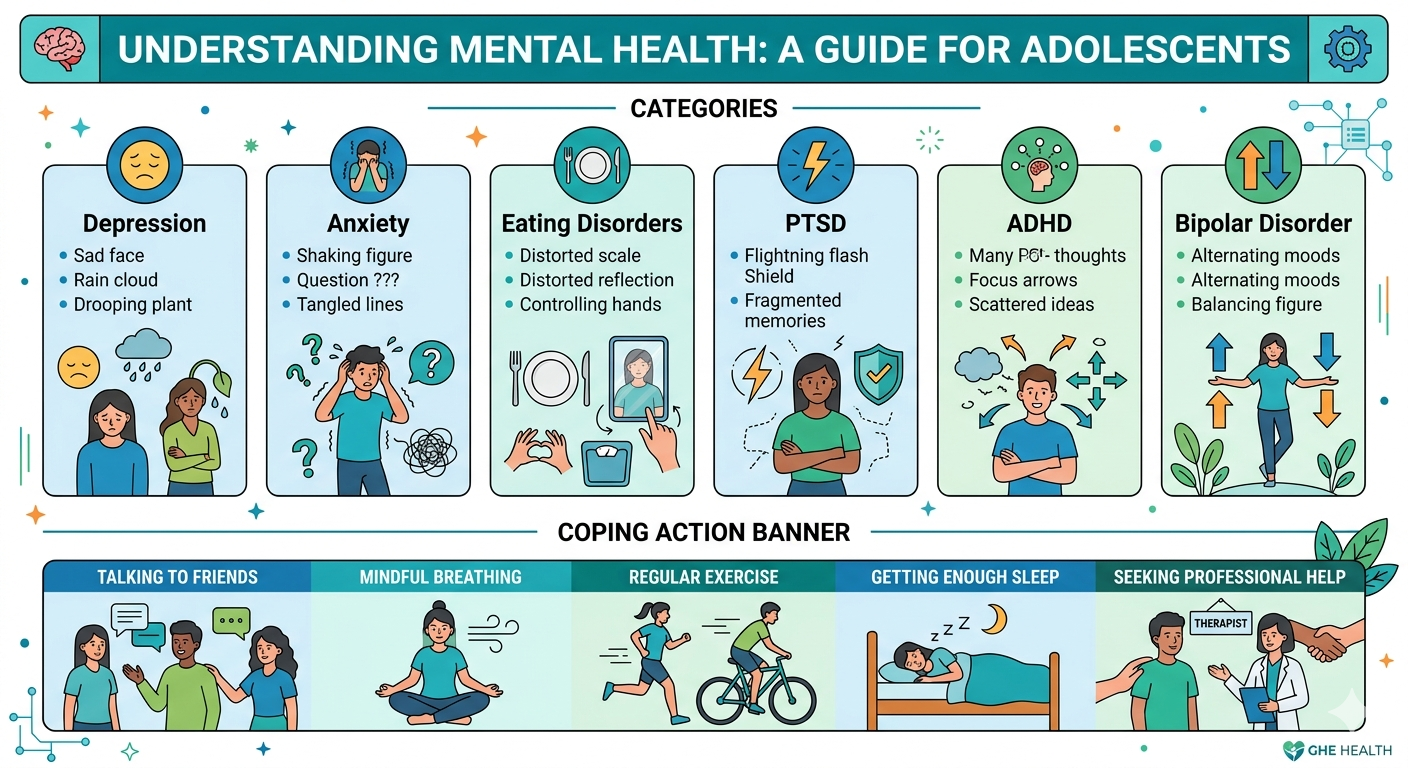
Anxiety is a normal human response to perceived threat. Anxiety disorders involve excessive or persistent anxiety that can interfere with daily life.
Depressive disorders can involve persistent low mood, reduced interest or pleasure, changes in energy and other symptoms that affect everyday functioning.
Bipolar disorder involves episodes of significant changes in mood, energy and activity, including periods of elevated or unusually activated mood and periods of depression.
PTSD can develop after exposure to traumatic events and may involve persistent trauma-related symptoms that affect emotions, thoughts, sleep or everyday functioning.
OCD involves persistent unwanted thoughts, images or urges and/or repetitive behaviours or mental acts that can become difficult to control and interfere with life.
Eating disorders are serious mental and physical health conditions involving disturbed relationships with eating, food, body image or related behaviours. They are not simply matters of appearance or willpower.
Neurodevelopmental conditions begin during development and can affect attention, learning, communication, behaviour or sensory processing. ADHD and autism are examples.
Psychotic disorders can affect perception, thinking and interpretation of reality. Early assessment and appropriate support are important.
Everyone experiences sadness, worry, frustration or stress. A mental disorder involves a pattern of symptoms and difficulties that require appropriate clinical assessment.
A questionnaire may identify symptoms that deserve further attention. It cannot by itself establish a diagnosis.
A diagnosis does not determine a person's abilities, relationships, education, career or future.
Stigma can create shame, discrimination and social isolation. It can also discourage people from seeking appropriate support.
We can challenge stigma by using respectful language, learning from evidence, listening to lived experience and treating every person with dignity.
Mental health conditions are experienced by individuals, but their prevention, recognition and support are influenced by wider environments.
Symptoms, coping, strengths, health behaviours and personal experiences.
Relationships, communication, bullying, belonging and social support.
Schools, recreation, safety, services and inclusive community environments.
Health systems, education, social protection, policy and equitable access to care.
Conflict, displacement, climate-related pressures, humanitarian crises and global inequalities.
Mental health is shaped partly by social determinants of health. Poverty, discrimination, violence, unsafe housing, exclusion, educational opportunities and access to services can influence both risk and recovery.
Mental health is an essential part of health and wellbeing.
Equity requires reducing barriers and discrimination.
Supportive schools can promote participation and wellbeing.
Safety, rights and responsive institutions matter.
NextGenU's Introduction to Psychology includes modules on psychological disorders, health psychology, stress, coping and mental health. It provides a deeper academic pathway for learners who want to go beyond this GHE introduction.
Correct answer: B. A mental disorder is a health condition involving significant changes in thoughts, emotions, behaviour or functioning.
Correct answer: C. Anxiety is a normal human response, but anxiety disorders involve persistent or excessive anxiety that can interfere with daily life.
Correct answer: A. Screening can identify symptoms that may warrant further assessment; diagnosis requires appropriate clinical evaluation.
Correct answer: D. Bipolar disorder involves significant episodes of mood, energy and activity changes.
Correct answer: B. Eating disorders are serious health conditions and should not be reduced to appearance, weight or willpower.
Correct answer: C. Stigma can contribute to discrimination, isolation and reluctance to seek appropriate support.
Correct answer: A. Asking who faces greater barriers to mental-health services is an equity-oriented question.
Correct answer: D. They are associated with differences in development that can affect areas such as attention, communication, learning or sensory processing.
Correct answer: B. Use respectful language, learn from evidence and avoid stereotypes.
Correct answer: A. No. A diagnosis describes a health condition; it does not define the whole person.
Continue through all five GHE Mental Health pages.