01
Wellbeing
Mental wellbeing includes our ability to learn, develop relationships, cope with everyday challenges and participate meaningfully in life.
Mental health is part of everyone's health. Explore wellbeing, resilience, relationships, common mental health challenges, prevention and ways to support ourselves and others.
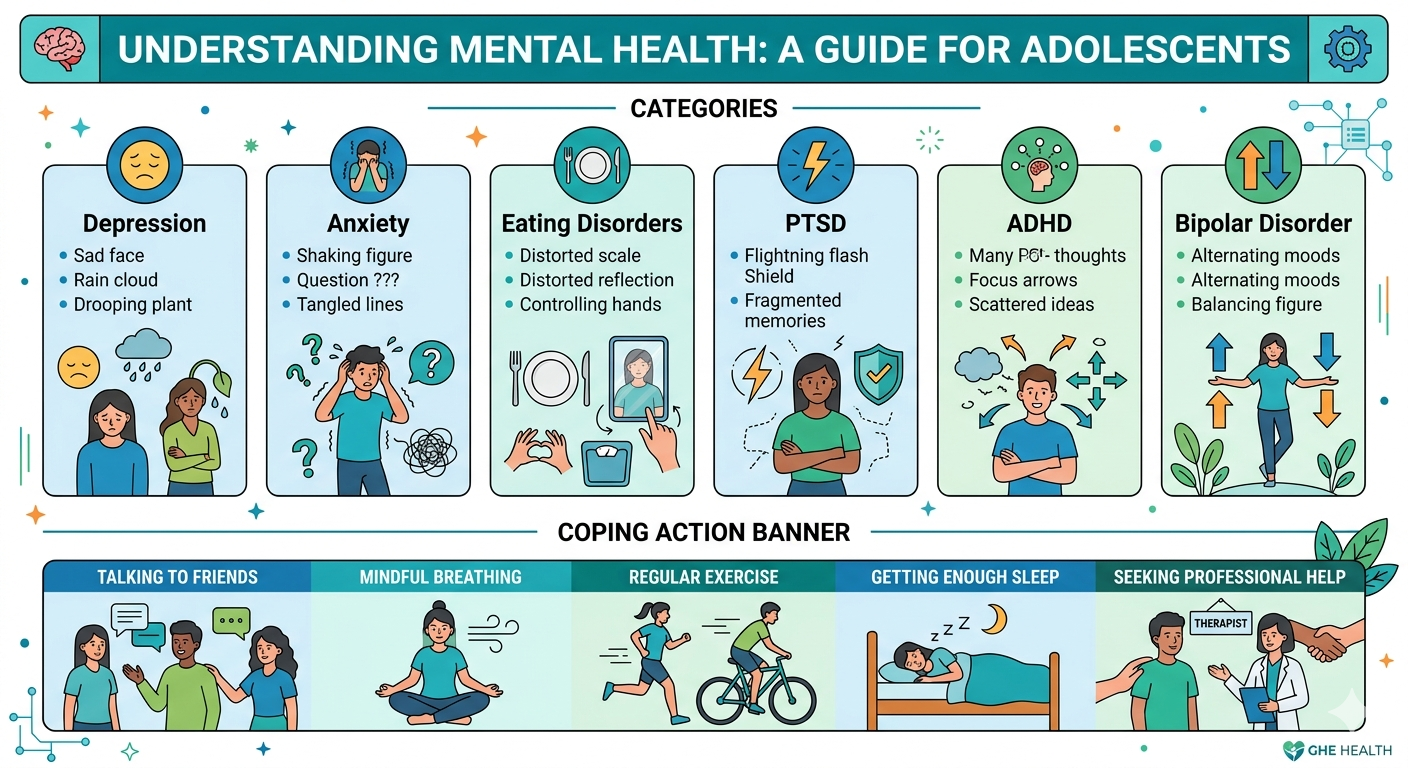
We all have mental health. It can change throughout life and is influenced by our experiences, relationships, environments and opportunities.
Mental wellbeing includes our ability to learn, develop relationships, cope with everyday challenges and participate meaningfully in life.
Mental health conditions can affect thoughts, emotions, behaviour and daily functioning. They are health conditions, not personal failures.
People experience mental health differently. Understanding diversity, reducing stigma and creating supportive environments benefit everyone.
Follow the journey from understanding yourself to understanding the wider world.
What is mental health and why does it matter?
Discover evidence about wellbeing, risks and protective factors.
Question assumptions, myths and stigma.
Connect mental health with people, places and systems.
Consider your own role and the experiences of others.
Choose constructive, respectful and evidence-informed action.
Mental health conditions are diverse. Learning about them can reduce fear, misinformation and stigma.
Learn how anxiety disorders differ from ordinary experiences of worry or nervousness.
Explore Anxiety →Understand depression, its effects on daily life and the importance of appropriate support.
Explore Depression →Learn about changes in mood and energy and why professional assessment matters.
Explore Bipolar Disorder →Understand trauma-related mental health challenges and the importance of safety, support and recovery.
Explore PTSD →Learn about eating disorders without reducing people to appearance, weight or stereotypes.
Explore Eating Disorders →Explore ADHD, autism and different ways brains can develop, process information and interact with the world.
Explore Neurodevelopment →Mental health is influenced by many factors. Protective factors can strengthen wellbeing and resilience, although no single factor can guarantee a particular outcome.
Resilience is the capacity to adapt, recover and continue developing when facing challenges. It can be supported by relationships, skills, resources and safe environments.
Risk is not destiny. Mental health outcomes emerge from the interaction of many individual, social, environmental and structural factors.
Emotional skills, biology, health behaviours and previous experiences can influence vulnerability.
Conflict, bullying, isolation and lack of support can increase vulnerability, while caring relationships can provide protection.
Schools, neighbourhoods, safety, inclusion and access to community resources all matter.
Poverty, inequality, education, social protection and availability of health services influence opportunities for mental wellbeing.
Conflict, displacement, humanitarian emergencies, climate change, disease outbreaks and global inequalities can affect mental health.
Stigma can turn a health challenge into isolation. It can make people afraid to talk, seek support or participate fully in school, work and community life.
We can challenge stigma by listening respectfully, learning from evidence, avoiding stereotypes and treating people with dignity.
Promoting mental health is not only about treating conditions. It is also about creating environments where people can thrive.
Encourage healthy routines, supportive relationships, meaningful activities and opportunities to participate.
Persistent changes in mood, behaviour, relationships, learning or daily functioning may be reasons to talk with a trusted adult or qualified professional.
Asking for help is a strength. Support may come from trusted adults, school resources, community services or health professionals.
Inclusion, belonging and respectful relationships can be important parts of mental health promotion.
If something is affecting your wellbeing or daily life, consider talking with a trusted adult, teacher, school counsellor, family member, healthcare professional or another appropriate support person.
Notice → Talk → Connect → Seek appropriate support
Supporting a friend does not mean becoming their therapist. Listen, care and help connect them with an appropriate trusted adult or professional when needed.
Mental health is personal — but it is never only personal.
Emotions, thoughts, habits, coping, sleep, activity, learning and personal strengths.
Belonging, communication, friendships, family relationships, bullying, support and inclusion.
Schools, neighbourhoods, recreation, digital spaces, community services and safe environments.
Health and education systems, social protection, policies, affordability and equitable access to support.
Conflict, displacement, climate change, global crises, human rights and inequalities between populations.
People do not begin with the same opportunities, resources or exposures. Poverty, discrimination, unsafe environments, violence, exclusion, education, housing and access to services can influence mental health and wellbeing.
An equity lens asks:
Mental health connects with many dimensions of sustainable development.
Mental health is an essential component of health and wellbeing across the life course.
Equity in mental health requires addressing discrimination, exclusion and unequal access to opportunities and services.
Supportive learning environments can contribute to wellbeing, inclusion and educational participation.
Gender norms, discrimination and unequal opportunities can influence mental health.
Safe, inclusive and healthy communities support wellbeing.
Safety, human rights, inclusion and responsive institutions matter for mental health.
Researchers and health professionals use structured questionnaires and other measures to understand symptoms, wellbeing, functioning and changes over time.
These tools can support screening, research and communication. They do not automatically provide a diagnosis.
Explore Mental Health Tools →What are we trying to understand?
Use an appropriate validated tool.
Consider context, limitations and purpose.
Connect findings with appropriate next steps.
Want to explore this topic further? NextGenU provides free, competency-based health education developed with academic and professional partners.
GHE connects learners with trusted organizations and educational resources rather than trying to replace professional services.
Youth-focused mental health and wellbeing resources in British Columbia.
Visit Foundry →National resources, knowledge and initiatives addressing mental health and stigma.
Visit MHCC →Education and evidence-based information about mental health and mental health conditions.
Visit CAMH →Mental health information, promotion and community resources across Canada.
Visit CMHA →A national Canadian resource providing information and support for young people.
Visit Kids Help Phone →Mental health leadership begins with small, respectful, evidence-informed actions.
Question myths and seek reliable evidence.
Give people space to be heard without judgement.
Challenge stigma and exclusion.
Help people connect with appropriate support.
Contribute to healthier and more equitable communities.
Think carefully. These questions test understanding, application, stigma awareness and the GHE global-health perspective.
Correct answer: B. Mental health is a state of wellbeing that supports coping, learning, relationships and participation in life. It exists on a continuum and can change over time.
Correct answer: C. Supportive relationships can provide belonging, encouragement and practical support.
Correct answer: A. Risk factors can increase vulnerability, but exposure to a risk factor does not determine an individual's mental health outcome.
Correct answer: D. Supportive relationships can strengthen belonging, coping and access to help.
Correct answer: B. Stigma can discourage people from talking about their experiences or seeking appropriate support.
Correct answer: C. Asking who faces greater exposure to risk, fewer protective resources or greater barriers to support helps identify inequities.
Correct answer: A. Mental health is influenced by interacting individual, relational, community, national and global factors.
Correct answer: D. A questionnaire can provide useful information for screening or research, but a questionnaire alone does not automatically establish a diagnosis.
Correct answer: B. Learning from evidence, avoiding stereotypes, listening respectfully and treating people with dignity can help reduce stigma.
Correct answer: A. SDG 3 — Good Health and Well-being. Mental health is also closely connected with SDG 10 and several other Sustainable Development Goals.
Mental health is a journey of understanding, connection, reflection and action. Continue through the five-part GHE learning pathway.